Screening in pregnancy plays an important role in protecting the health of women and babies. A new UK-wide effectiveness review shows that the national NHS Infectious Diseases in Pregnancy Screening (IDPS) programmes have been highly effective in reducing the transmission of serious infections from mother to baby.
Read the full report on GOV.UK.
The IDPS programmes offer screening for human immunodeficiency virus (HIV), hepatitis B and syphilis to all pregnant women in the UK as part of routine antenatal care. Screening is recommended in every pregnancy, regardless of perceived risk, so that infections can be identified early and women and babies can receive timely treatment and support.
A review team has now completed a comprehensive evaluation of the programmes, drawing on more than 2 decades of national screening data, surveillance data, outcomes data and guidance from experts in screening and the management of infectious diseases in pregnancy.
Importance of screening in pregnancy
Without effective intervention, HIV, hepatitis B and syphilis can all be passed from mother to baby during pregnancy, childbirth or breastfeeding. This is known as vertical transmission, and it can have devastating consequences, including:
- HIV can lead to lifelong infection
- hepatitis B transmitted in early life often results in chronic infection and can lead to serious liver disease
- syphilis can cause miscarriage, stillbirth or severe congenital infection
International evidence shows that diagnosis early in pregnancy, combined with effective treatment and neonatal care, can dramatically reduce the risk of vertical transmission. The NHS IDPS programmes were introduced more than 20 years ago to ensure these benefits are delivered consistently across the UK.
Key findings of the review
The review, which considered data from 2000 up to 2024, assessed whether the programme has met its core objective, which is to reduce the vertical transmission of HIV, hepatitis B and syphilis from mother to baby.
The review found that the proportion of pregnant women eligible for screening who have a confirmed screening result (known as coverage) remains extremely high. Between 2016 and 2024, more than 5 million pregnant women were eligible for screening in England and Northern Ireland, with coverage exceeding 99% for all 3 infections. It is rare for pregnant women to decline the offer of screening, and the number of 'declines' has fallen in recent years.
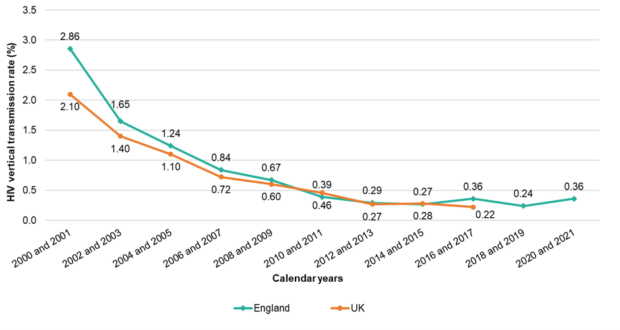
The review showed there have been substantial and sustained reductions in vertical transmission, particularly for HIV and hepatitis B:
- vertical transmission of HIV has fallen by around 90% since the early 2000s and is now below 0.4%
- vertical transmission of hepatitis B has fallen to very low levels, reaching around 0.06% in screening year 1 April 2024 to 31 March 2025, well below the World Health Organization (WHO) target of 2%
- over 98% of pregnant women with a screen positive result for HIV were receiving treatment to supress the infection by the time they gave birth
- uptake of timely hepatitis B vaccination for babies at risk has remained above 90%, exceeding international elimination targets
These findings show that high screening coverage, combined with effective treatment and neonatal care, can prevent most infections in babies.
A more complex picture for syphilis
The review highlighted a more challenging picture for syphilis. Syphilis positivity in pregnancy has increased in recent years, reflecting wider increases in syphilis in the general population. There has also been a rise in cases of congenital syphilis.
However, rates remain well below the WHO global elimination threshold. Most instances were complex cases, such as late booking into antenatal care, syphilis infection being acquired later in pregnancy after an initial negative screening result, or a lack of engagement with antenatal/health services. Without the IDPS programme, the number of cases of congenital syphilis would be much higher.
These findings highlight the importance of regular review and consideration of how screening pathways may need to adapt as patterns of infection change.
An effective screening programme
This effectiveness review shows that the IDPS programme continues to deliver major public health benefits more than 20 years after it was introduced. It also demonstrates the importance of reviewing established screening programmes to ensure they remain effective as populations, services and disease patterns evolve.
The UK NSC will consider the results as part of its ongoing work to ensure that screening programmes continue to be evidence‑based, effective and appropriate for the population.
Thank you
This was a collaborative piece of work, with input from stakeholders and subject matter experts across the 4 UK nations. We would like to thank everyone who was involved with the IDPS effectiveness review for their help and support throughout this project.
Keep up to date
The UK NSC blog provides up to date news from the UK NSC. You can register to receive updates direct to your inbox, so there is no need to keep checking for new articles. If you have any questions about this blog article, or about the work of the UK NSC, please email uknsc@dhsc.gov.uk.
Recent Comments